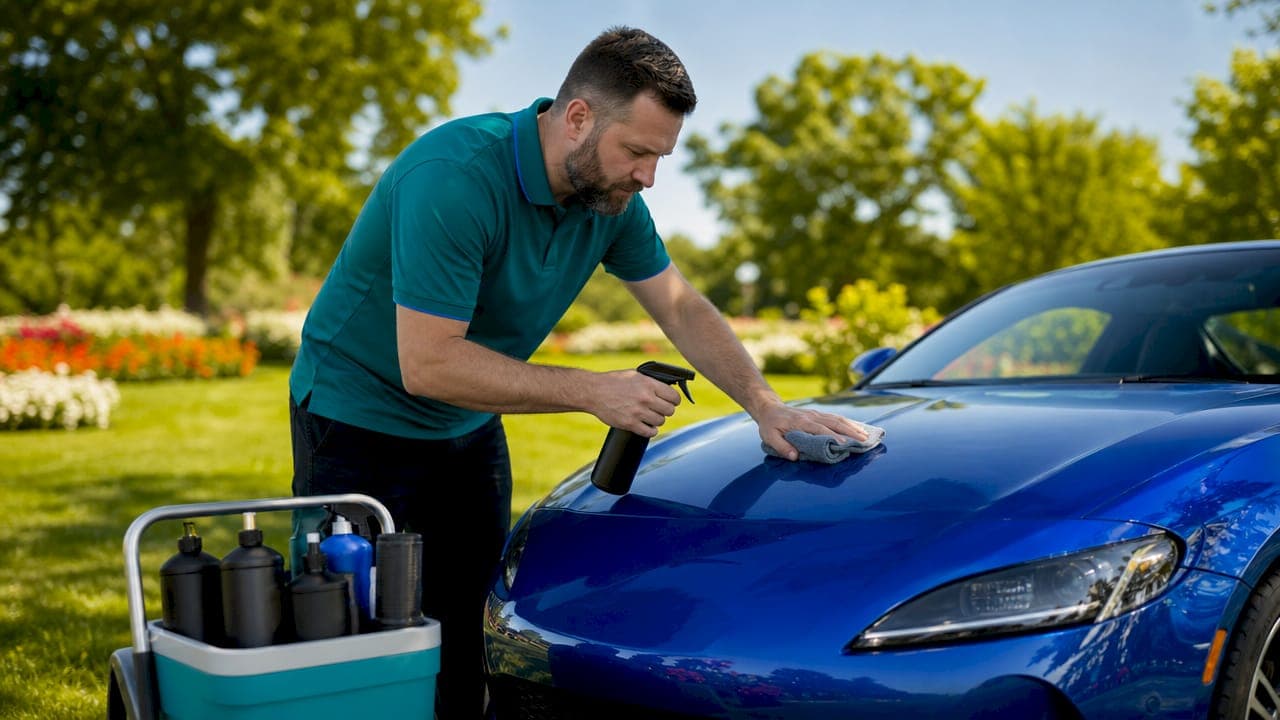
UV protection in car detailing is the critical barrier that prevents paint oxidation and fading caused by ultraviolet radiation from the sun. The role of UV protection in detailing goes far beyond aesthetics. It determines how long your factory clear coat survives, how much you spend on corrective work, and what your car is worth when you sell it. 9H ceramic coatings block 88–94% of UVA and UVB radiation at the clear coat layer, and that level of defense can extend paint life by 30–50% in high-sun regions. Bryansdetailingomaha has applied this science to over 1,500 vehicles across Omaha and Bellevue, and the results speak for themselves.
How do UV rays damage your car's paint and clear coat?
UV radiation breaks down the polymer chains inside your clear coat. That layer is not just a shine coat. It is the primary chemical shield between your paint pigment and the environment. Once UV rays penetrate it, oxidation begins.
Oxidation is the visible result of that breakdown. The clear coat turns chalky, loses gloss, and eventually peels. At that stage, no amount of washing or waxing reverses the damage. Without UV protection, clear coat failure typically appears after 8–12 years in high-sun regions, but aggressive climates accelerate that timeline significantly.
Here is what UV damage looks like as it progresses:
- Dullness and loss of gloss: The first sign. UV breaks down the top layer of clear coat, scattering light instead of reflecting it cleanly.
- Chalky or milky texture: Oxidation has reached deeper into the clear coat. The surface feels rough to the touch.
- Fading pigment: UV rays penetrate through a compromised clear coat and attack the color layer beneath. Reds and blacks fade fastest.
- Peeling and flaking: The clear coat separates from the base coat. At this point, repainting is the only fix.
- Increased surface roughness: Degraded clear coat traps contaminants more easily, making every wash harder and more likely to cause swirl marks.
High-UV states like Arizona, Nevada, and Florida see this progression faster than the Midwest. But Nebraska summers deliver enough UV intensity to cause real damage over a vehicle's lifespan. Parking outdoors year-round without protection accelerates every stage on that list.
What detailing products provide UV protection and how effective are they?
The UV protection benefits in detailing products vary significantly by type. Ceramic coatings, paint protection film, and traditional waxes all block UV rays, but they do it differently and for different lengths of time.
Ceramic coatings
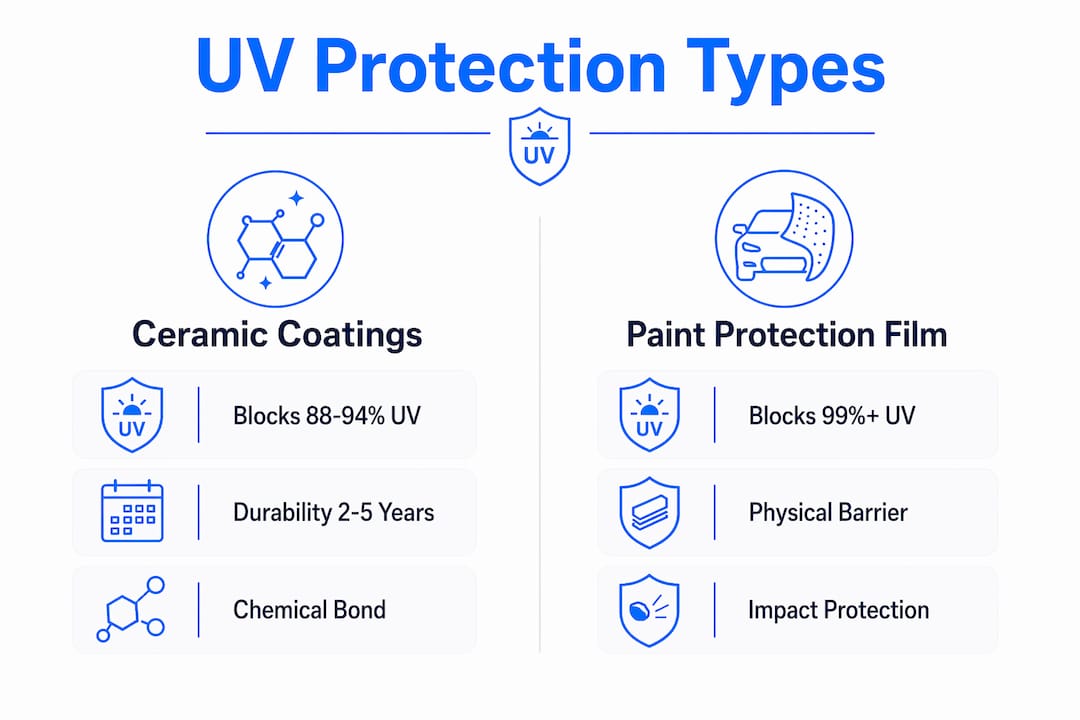
Ceramic coatings block 88–94% of UVA and UVB and last 2–5 years when professionally applied. They bond chemically to the clear coat, forming a hard, glass-like layer that also resists chemical etching, bird droppings, and road grime. The ceramic coating service at Bryansdetailingomaha uses industrial-grade products that deliver this level of protection with a showroom finish.
Paint protection film
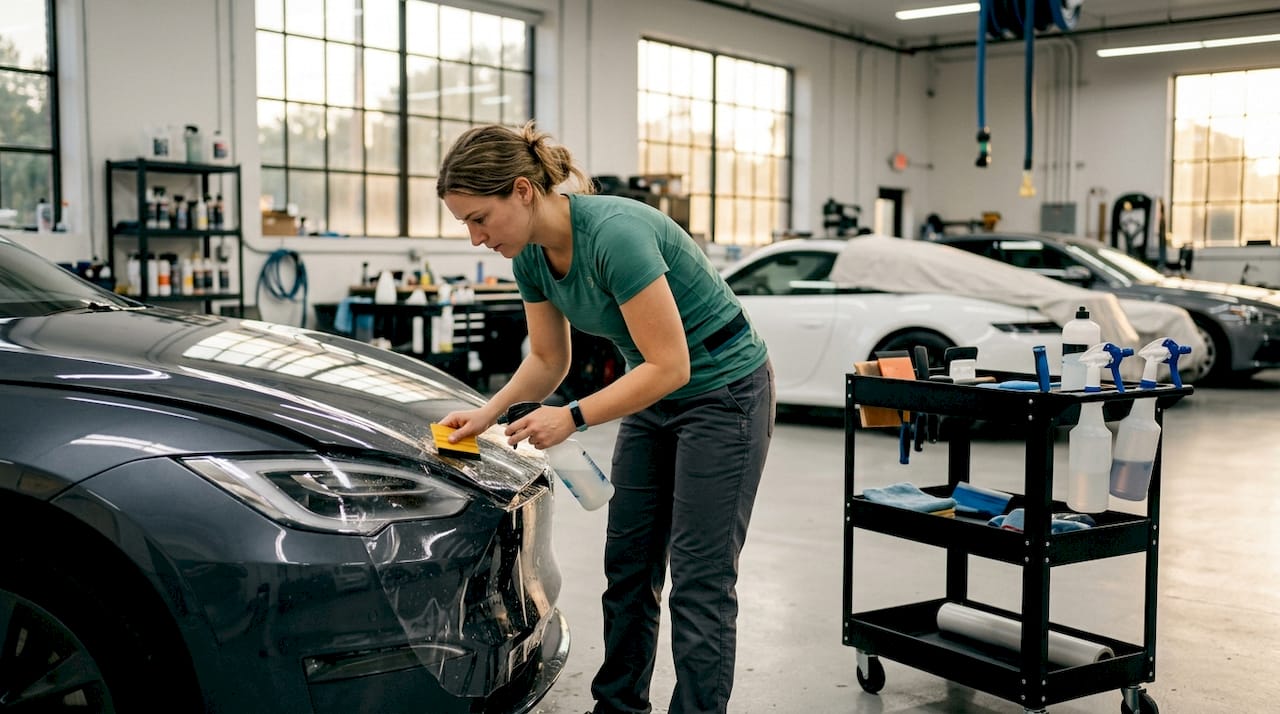
Paint protection film blocks over 99% of UV rays and adds a physical barrier that ceramic coatings cannot provide. PPF is a urethane film that absorbs rock chips, scratches, and road debris. Many PPF products are self-healing, meaning minor surface scratches disappear with heat exposure. PPF is the highest level of UV and physical protection available in detailing today.
Waxes and synthetic sealants
Waxes and sealants offer a sacrificial UV barrier. They absorb UV rays and degrade over time, which is the point. Reapplying wax or sealant every 2–3 months keeps that barrier active. The UV-blocking power in these products comes from their synthetic base polymers, not from PTFE additives. PTFE mainly provides slickness, not UV defense. That distinction matters when you are choosing a product.
| Protection type | UV blocking | Durability | Cost range | Added benefits |
|---|---|---|---|---|
| Ceramic coating | 88–94% | 2–5 years | $500–$2,000 | Chemical resistance, hydrophobicity |
| Paint protection film | Over 99% | 5–10 years | Higher investment | Physical impact protection, self-healing |
| Wax or sealant | Moderate | 2–3 months | Low | Easy reapplication, accessible |
Pro Tip: Combining PPF on high-impact areas like the hood and bumper with a ceramic coating over the full vehicle gives you the best of both worlds. You get physical protection where it matters most and UV defense everywhere else.
Why is proper surface prep critical before UV protective coatings?
Surface preparation is not optional. It is the step that determines whether your UV protective coating performs as advertised or fails within months.
Applying coatings over paint defects seals imperfections permanently under a glass-like layer. Swirl marks, scratches, water spots, and contamination become locked in. The coating makes them more visible, not less. Paint correction before application is not a luxury. It is a requirement.
Here is what proper prep involves:
- Chemical decontamination: Iron removers and clay bar treatment pull embedded contaminants from the clear coat surface. Coatings bond to clean paint, not to iron particles or road tar.
- Paint correction: Machine polishing removes swirl marks, light scratches, and oxidation. This step restores clarity and creates a uniform surface for the coating to bond to.
- Panel wipe-down: Isopropyl alcohol removes polish oils and residue. Any oil left on the surface weakens the chemical bond between the coating and the clear coat.
- Inspection under lighting: Professional detailers use high-intensity LED lighting to catch defects invisible in normal light. Skipping this step means missing problems that will show up later.
Pro Tip: Never apply a ceramic coating the same day as a car wash. Give the surface time to fully dry and reach ambient temperature. Moisture trapped under a coating causes adhesion failure.
Bryansdetailingomaha performs heavy chemical decontamination and multi-stage paint correction before every coating application. That prep work is what separates a coating that lasts five years from one that fails in twelve months.
How should car owners maintain UV protection for lasting paint preservation?
UV protection does not maintain itself. The products that block UV rays need consistent care to keep performing at full strength.
- Wash with pH-neutral soap. Standard dish soap and alkaline cleaners strip wax and degrade ceramic coatings over time. pH-neutral car wash soap cleans without attacking the protective layer.
- Reapply wax or sealant every 2–3 months if your vehicle does not have a ceramic coating. That schedule keeps the sacrificial UV barrier active between applications.
- Use manufacturer-recommended maintenance products for ceramic coatings and PPF. Many coatings require a specific maintenance spray to refresh hydrophobic properties and UV resistance between annual inspections.
- Avoid abrasive washing methods. Automatic car washes with brushes, rough wash mitts, and high-pressure nozzles aimed directly at panel edges all damage clear coat and protective layers. Gentle washing preserves UV protection and extends coating lifespan.
- Use covered parking or a car cover when possible. No coating eliminates UV exposure entirely. Reducing direct sun exposure is the simplest way to extend the life of any protective treatment.
- Schedule annual inspections. A professional detailer can assess coating condition, spot early signs of UV damage, and recommend corrective steps before problems become expensive. Bryansdetailingomaha offers maintenance detailing memberships designed to keep your protection current year-round.
The car owners who get the most out of their ceramic coatings are the ones who treat maintenance as part of the investment, not an afterthought. A coating applied correctly and maintained properly will outperform its rated lifespan in most climates.
Key Takeaways
UV protection is the single most cost-effective measure a car owner can take to preserve factory paint, prevent oxidation, and maintain resale value over the vehicle's lifespan.
| Point | Details |
|---|---|
| UV damage is cumulative | Clear coat oxidation builds over years; early protection prevents irreversible fading and peeling. |
| Ceramic coatings lead in durability | 9H coatings block 88–94% of UV rays and last 2–5 years with professional application. |
| PPF offers maximum defense | Paint protection film blocks over 99% of UV and adds physical impact resistance ceramic coatings cannot match. |
| Surface prep determines coating performance | Paint correction before application is mandatory; coatings seal defects permanently if skipped. |
| Maintenance extends protection | pH-neutral washing, periodic reapplication, and covered parking keep UV defenses active long-term. |
Why I consider UV protection the foundation of every detail
After detailing over 1,500 vehicles in Omaha and Bellevue, I have seen the same pattern repeat itself. Car owners come in after years of neglect, frustrated by chalky paint and faded color, expecting a wash and wax to fix it. By that point, the clear coat is gone. The only real options are paint correction to slow the decline or a full repaint to start over. Both cost far more than proactive protection would have.
Reversing UV oxidation is difficult and expensive once it sets in. That is the uncomfortable truth most car owners do not hear until it is too late. A ceramic coating applied at year one of ownership costs a fraction of what paint correction costs at year seven, and it prevents most of that damage from happening at all.
What I have also noticed is that car owners in the Midwest underestimate UV exposure. Nebraska does not feel like a high-sun state, but summer UV index readings here regularly hit levels that cause real paint degradation over a vehicle's lifespan. Combining a ceramic coating with PPF on the front end of the vehicle is the approach I recommend most often. Ceramic coatings and PPF together provide UV and physical protection that neither product delivers alone. That combination is what I would put on my own vehicle, and it is what I recommend to every car owner who wants their paint to look sharp ten years from now.
— Bryan's
Protect your paint with Bryansdetailingomaha
Your car's paint is a long-term investment. The right UV protection applied correctly keeps it looking sharp and holds your vehicle's value for years.
Bryansdetailingomaha offers professional ceramic coating and paint correction services built around one goal: preserving your paint the right way. Every application starts with thorough chemical decontamination and multi-stage paint correction, so your coating bonds to a perfect surface. With a 4.9 Google rating and over 1,500 vehicles serviced across Omaha and Bellevue, the results are proven. Request a quote and find out which UV protection package fits your vehicle and your budget.
FAQ
What does UV protection actually do for car paint?
UV protection blocks UVA and UVB rays from breaking down the polymer chains in your clear coat, preventing oxidation, fading, and peeling. Without it, clear coat failure typically appears after 8–12 years in high-sun conditions.
How long does ceramic coating UV protection last?
Professionally applied 9H ceramic coatings last 2–5 years and block 88–94% of harmful UV radiation. Longevity depends on maintenance habits and climate conditions.
Is paint protection film better than ceramic coating for UV defense?
PPF blocks over 99% of UV rays and adds physical impact protection that ceramic coatings do not provide. Combining both products gives maximum UV defense and physical durability.
How often should I reapply wax if I do not have a ceramic coating?
Reapply quality wax or synthetic sealant every 2–3 months to maintain an active UV barrier. The protection degrades with washing and sun exposure, so consistent reapplication is the key.
Does surface preparation really affect UV protection performance?
Yes. Applying a coating over contaminated or scratched paint seals those defects permanently and weakens the coating's bond to the clear coat. Paint correction before application is required for full UV protection effectiveness.